The tweet was deleted by the author.
But we saved everything 🙂.
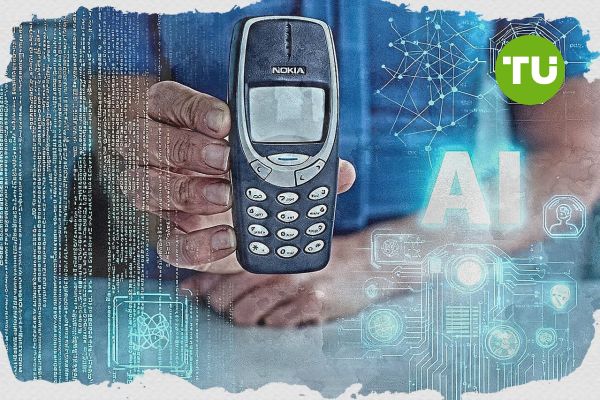
After many years out of the spotlight, the former mobile giant is making itself known again. Nokia is investing billions of dollars into artificial intelligence and pushing forward a series of ambitious projects. But can these initiatives restore its status as a global technology leader?
Recently, Nokia made a high-profile announcement: the company will invest $4 billion into expanding its research centers in the United States and scaling production of AI-ready network equipment. This is not just an infrastructure refresh — it is an investment in building the technological backbone for the country’s neural-network era.
The focus spans networks at every level: mobile, fixed, IP backbones, optical solutions, and the broader architecture that will hold up the American AI economy. These investments complement previous spending — the $2.3 billion that arrived with the acquisition of Infinera, and the $456 million Infinera secured earlier under the CHIPS Act to build two new facilities. Altogether, this forms a domestic production chain for chips, equipment, and networking systems — something rare in an industry that traditionally relies on Asia.
The project also carries strategic significance for U.S. defense and critical infrastructure. Nokia is strengthening its work on secure networks, quantum-safe communications, automation, and digital architectures capable of supporting large-scale AI clusters. Nokia Bell Labs — the company’s legendary R&D division — plays a key role here. It is developing new materials, optics, and algorithms designed to provide the United States with technological superiority in the age of artificial intelligence.
But what path led the company to these ambitious projects? Everyone remembers Nokia as a maker of iconic mobile phones that eventually fell behind the pace of innovation. Yet few fully grasp how radically the company reshaped its direction after exiting the smartphone market. Instead of trying to return to the consumer space, Nokia made a strategic pivot toward complex infrastructure: communication networks, optics, and data-center solutions.
Over time, this bet began to pay off. By 2025, Nokia had returned to stable revenue growth, strengthened its position in 5G and optical networking, and effectively redefined its place within the telecom industry. The company no longer represents mobile devices — it has become a provider of critical-infrastructure architecture.
Against this backdrop, a landmark event took place: Nvidia, the world-leading developer of graphics processors, invested $1 billion in Nokia. The partnership benefits both sides. Nokia integrates Nvidia’s compute chips into software for 5G and future 6G networks, enhancing throughput and adaptability under AI workloads. In return, Nvidia gains access to Nokia’s crucial expertise in optical and data-center networking — the very foundations that support today’s AI training and deployment infrastructure.
The market reacted instantly: Nokia’s shares jumped more than 20%, and analysts noted that the company had secured its most meaningful strategic partnership in years — one capable of significantly reinforcing its industry position.
But the company’s ambitions extend far beyond artificial intelligence. Alongside its AI initiatives, Nokia is pursuing another strategic direction: digital assets and blockchain technologies. In 2024, the company filed a patent for a digital-asset encryption system that describes creating a secured version of an asset, indexing it, and linking it to an identifier. In effect, this lays the groundwork for secure transactions across future networks.
This filing is neither a coincidence nor a side experiment. Nokia is actively developing architectures for Web3 and the Internet of Value — a world where value travels across networks as easily as data.
Parallel efforts include digital factory twins, industrial IoT, automation systems, and networks designed to handle asset tokenization. Together, these components form an ecosystem capable of connecting physical, digital, and economic processes — the way industries of the future will operate.
Nokia is experiencing not just a brand refresh, but a comprehensive technological transformation. It is investing billions in AI infrastructure, strengthening strategic alliances, and branching into new domains — from Web3 and digital assets to next-generation networks. In essence, Nokia is building a unified technological platform: from optics and data centers to systems for securing digital value.
Will this bring the company back to the ranks of global leaders? It is too early to say — but some indicators are already visible. The partnership with Nvidia acted as a powerful catalyst, lifting Nokia’s stock price, while major U.S. investments confirmed trust in its infrastructure solutions. The real impact will unfold over the long term. To reclaim its place among top-tier players, Nokia must not only execute its ambitious plans but also withstand fierce competition for AI infrastructure — the most challenging and capital-intensive technological race of our time.

 Afghanistan
 Albania
 Algeria
 Angola
 Argentina
 Armenia
 Australia
 Austria
 Azerbaijan
 Bahamas
 Bahrain
 Bangladesh
 Belarus
 Belgium
 Bolivia
 Botswana
 Brazil
 Brunei
 Bulgaria
 Cambodia
 Cameroon
 Canada
 Chile
Chile
 China
China
 Colombia
 Congo
Congo
 Costa Rica
 Cote d'Ivoire
 Croatia
 Cuba
Cuba
 Cyprus
 Czechia
 DR Congo
 Denmark
 Dominican Republic
 Ecuador
 Egypt
Egypt
 El Salvador
 Estonia
 Eswatini
 Ethiopia
 Finland
 France
 Georgia
 Germany
 Ghana
Ghana
 Greece
 Haiti
Haiti
 Hong Kong
 Hungary
 India
India
 Indonesia
 Iran, Islamic republic
 Iraq
Iraq
 Ireland
 Israel
 Italy
Italy
 Jamaica
 Japan
Japan
 Jordan
 Kazakhstan
 Kenya
Kenya
 Korea
Korea
 Kuwait
 Kyrgyzstan
 Laos
Laos
 Latvia
 Lebanon
 Lesotho
 Libya
Libya
 Lithuania
 Luxembourg
 Madagascar
 Malaysia
 Malta
Malta
 Mauritius
 Mexico
 Moldova
 Mongolia
 Montenegro
 Morocco
 Mozambique
 Myanmar
 Namibia
 Nepal
Nepal
 Netherlands
 New Zealand
 Nigeria
 North Macedonia
 Norway
 Oman
Oman
 Pakistan
 Palestine
 Panama
 Papua New Guinea
 Paraguay
 Peru
Peru
 Philippines
 Poland
 Portugal
 Puerto Rico
 Qatar
Qatar
 Reunion
 Romania
 Rwanda
 Saudi Arabia
 Serbia
 Singapore
 Slovakia
 Slovenia
 Somalia
 South Africa
 Spain
Spain
 Sri Lanka
 Sweden
 Switzerland
 Syria
Syria
 Taiwan
 Tajikistan
 Tanzania
 Thailand
 Trinidad and Tobago
 Tunisia
 Turkey
 UAE
UAE
 Uganda
 Ukraine
 United Kingdom
United States
United Kingdom
United States
 Uruguay
 Uzbekistan
 Venezuela
 Vietnam
 Yemen
Yemen
 Zambia
 Zimbabwe