
When To Sell Bitcoin | Top Reasons



Editorial Note: While we adhere to strict Editorial Integrity, this post may contain references to products from our partners. Here's an explanation for How We Make Money. None of the data and information on this webpage constitutes investment advice according to our Disclaimer.
Sell Bitcoin when it reaches your profit target or key resistance levels based on technical analysis like RSI, Fibonacci retracements, and moving averages. If market sentiment turns bearish due to macro factors like rising interest rates, regulatory pressure, or on-chain data showing increased sell-offs, consider exiting. Long-term holders may also sell in phases to secure profits, rebalance portfolios, or reinvest during market dips.
When engaged in crypto trading, there are a lot of things to consider. Bitcoin, the king of digital gold, is both a financial revolution and a tech experiment wrapped into one. So, if you think mastering it will be easy, well, welcome to the world of market meltdowns and moonshots. But here’s the catch — making money with Bitcoin isn’t just luck; it’s strategy.
So, what’s the secret? Do your homework. Learn the ropes. Understand the risks. In this article, you will discover how to know when to sell crypto. Read on!
Risk warning: Cryptocurrency markets are highly volatile, with sharp price swings and regulatory uncertainties. Research indicates that 75-90% of traders face losses. Only invest discretionary funds and consult an experienced financial advisor.
Top reasons to sell Bitcoin now
If you’re holding Bitcoin, recent developments in the global and crypto landscape may prompt you to reassess your position. Here are some of the top reasons investors are considering selling now:
Rising global trade tensions
New tariffs introduced by the U.S. government have escalated global trade tensions, triggering a risk-off sentiment in financial markets. Bitcoin, often treated as a speculative asset, dropped below $80,000 as cautious investors began pulling capital from volatile markets.

Bearish technical indicators
Bitcoin is nearing what's known as a "death cross" — a technical pattern where the 50-day moving average falls below the 200-day moving average. This is typically seen as a warning sign of potential sustained downtrends, prompting many short-term traders to exit early.
Market-wide volatility and liquidations
More than $1.4 billion in crypto positions were liquidated recently due to sharp price movements. This kind of volatility often spooks investors, especially those with high exposure, increasing the appeal of cashing out before further swings.
Regulatory uncertainty
Governments are stepping up discussions around crypto regulations. Unclear or stricter rules could restrict access, increase taxation, or simply dampen enthusiasm around crypto investing — especially for institutional participants.
Opportunity to book profits
Bitcoin peaked above $100,000 in late 2024. Those who bought earlier have seen substantial gains, and with uncertainty growing, many are choosing to sell now and secure those profits while they can.
Top reasons to hold Bitcoin
Bitcoin isn’t just another speculative asset — it’s a revolution in finance. While price swings are common, history shows that long-term Bitcoin holders often see substantial gains. Instead of reacting to short-term market noise, smart investors focus on the bigger picture.
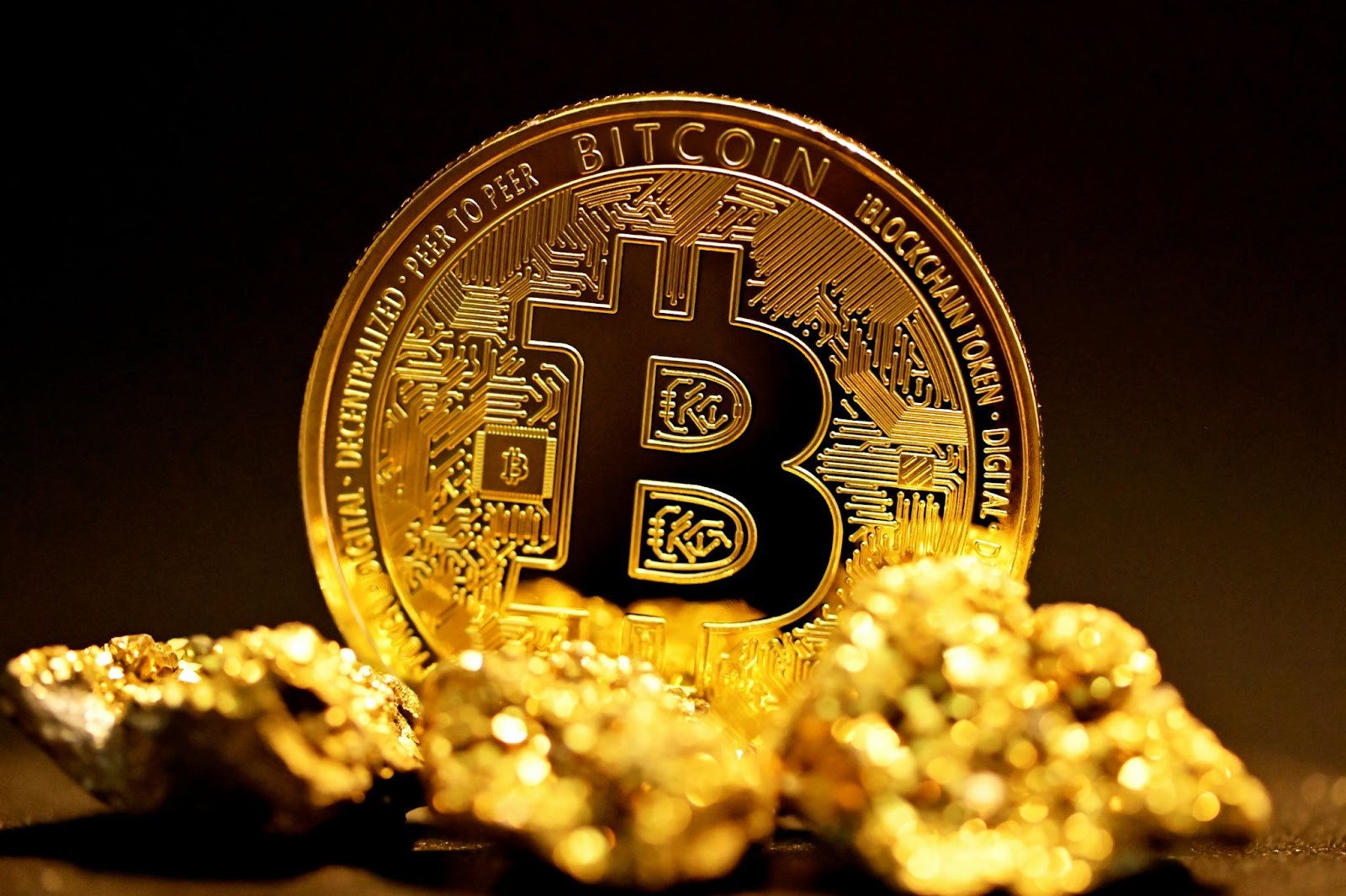
Here are the top reasons why holding Bitcoin could still be a winning strategy:
Hedge against inflation
Bitcoin is often seen as a digital alternative to gold. Its fixed supply of 21 million coins ensures scarcity, which helps it maintain value even when fiat currencies are affected by inflation. As governments continue to print money in response to economic challenges, Bitcoin’s appeal as a hedge strengthens for both individual and institutional investors.
Growing institutional adoption
The past few years have seen a notable rise in institutional interest. Major financial institutions, pension funds, and publicly traded companies are allocating portions of their portfolios to Bitcoin. This legitimization and growing demand among big players add a layer of long-term confidence to the asset.
Strong diversification tool
Bitcoin behaves differently than traditional assets like stocks or bonds, making it an effective diversification tool. Adding it to a portfolio can reduce overall risk and increase potential returns, especially during times of economic uncertainty or market volatility.
Technological advancements
Bitcoin’s ecosystem continues to develop. Innovations such as the Lightning Network are making transactions faster and cheaper. Ongoing improvements in security, wallet infrastructure, and user experience also make holding and using Bitcoin more accessible and practical over time.
Positive regulatory trends
Governments worldwide are moving toward clearer cryptocurrency regulations. While some regions still pose challenges, many countries are drafting policies that provide clarity for investors and businesses. Regulatory support and oversight can make Bitcoin more trustworthy and reduce entry barriers for new participants.
Scarcity-driven value appreciation
As the Bitcoin supply approaches its hard cap and halvings continue to reduce the rate of new supply, scarcity will likely drive demand. With fewer coins available and demand rising — especially from institutions and global investors — the long-term price trajectory could remain upward.
Global adoption and financial inclusion
Bitcoin is playing a key role in expanding financial access in underbanked regions. Its decentralized nature enables anyone with internet access to store value and transact without needing a traditional bank. This adoption in developing economies further supports Bitcoin’s long-term use case and demand.
Technical analysis of BTC/USD
Bitcoin recently rebounded from a key Fibonacci support level near $75,958, aligning with the 0.786 Fib retracement zone. This recovery followed a sharp corrective move from its March high around $88,812. The price currently hovers near $80,180, attempting to break out from a multi-week descending trendline.
On the daily chart, the 0.618 Fib level at $81,246 and the 0.5 Fib level at $82,836 remain crucial resistance levels. A close above $82,836 would confirm a short-term bullish reversal, potentially targeting the upper Fib range at $85,468 and $88,496. The long-term uptrend remains intact unless BTC breaches $69,081, which is the 1.618 Fib extension — often considered a panic zone in Elliott Wave retracement analysis.
Trendline pressure persists but macro structure remains bullish
LuxAlgo trendlines show BTC has been trading within a descending triangle pattern since mid-March. The breakout on April 7 retested the lower boundary and quickly reversed, suggesting strong buying interest below $76,000. The rejection from this trendline highlights the significance of the $82,000–$83,000 supply zone. A decisive breakout above this range could unlock targets at $88,496 and beyond.
However, the failure to maintain above this channel could expose BTC to a retest of $72,000 and potentially even $69,000. Below that, the next major support lies around $56,918 (2.618 Fib), followed by $44,755 (3.618 Fib), which would be considered oversold on macro timeframes.
Short-term indicators show mixed momentum, RSI and MACD show recovery
On the 4-hour timeframe, RSI recently bounced from deeply oversold levels around 26 and is now pushing toward neutral territory (currently around 44.29). This signals a potential short-term recovery but not a fully confirmed trend reversal.
MACD also shows early signs of a bullish crossover after being in a bearish trend for nearly two weeks. The histogram is shrinking, indicating that downward momentum is weakening. However, the MACD line remains below the signal line, suggesting caution is still warranted.
EMA levels show resistance cluster between $83,000 and $85,000
Exponential Moving Averages (EMA) on the 4-hour chart — especially the 50 EMA ($81,869), 100 EMA ($83,076), and 200 EMA ($84,846) — are converging into a dense resistance zone. This cluster could act as a make-or-break level for bulls.
If BTC manages to push above this range, momentum traders could jump in, driving the price toward the psychological $90,000 mark. On the flip side, repeated rejection from this area may trigger another wave of selling pressure.
StochasticRSI suggests near-term exhaustion of the bounce
The Stochastic RSI has surged back above 80, signaling overbought conditions in the short term. This suggests the current relief rally may face headwinds unless it's accompanied by strong volume or fundamental catalysts.
If the indicator crosses below the 80 mark, it could trigger a short-term pullback, particularly if combined with rejection at the $82,000–$83,000 resistance area.
Conclusion: Bulls face resistance, but structure remains hopeful
In summary, Bitcoin is showing resilience after bouncing off a major Fib support. However, the path to recovery is filled with layered resistance levels — $81,246, $82,836, and $85,468 all need to be breached for a full-fledged bullish continuation. The current confluence of resistance EMAs and overbought short-term indicators warrant cautious optimism. A sustained close above $83,000 could reignite the rally toward all-time highs.
Bitcoin price prediction 2025, 2030, 2040
| Year | Price in the middle of the year | Price at the end of the year |
|---|---|---|
| 2026 | $25 | $13 |
| 2027 | $8.9 | $10 |
| 2028 | $8.199999999999999 | $5.5 |
| 2029 | $6.3 | $5.1 |
| 2030 | $3.4 | $3.9 |
| 2031 | $3.1 | $2.1 |
| 2032 | $2.4 | $1.9 |
| 2033 | $1.3 | $1.5 |
| 2034 | $1.2 | $0.82 |
| 2035 | $0.93 | $0.75 |
| 2036 | $0.51 | $0.57 |
| 2037 | $0.47 | $0.31 |
| 2038 | $0.36 | $0.28 |
| 2039 | $0.19 | $0.22 |
| 2040 | $0.18 | $0.12 |
Note: These figures are based on current expert projections and are subject to change due to market dynamics.
Key factors influencing Bitcoin's future price
Institutional adoption. The entry of institutional investors continues to provide significant capital inflows and market stability.
Regulatory developments. Clear and favorable regulations are expected to boost investor confidence and facilitate broader adoption.
Technological advancement. Improvements in blockchain technology and scalability solutions are likely to enhance Bitcoin's utility and accessibility.
Macroeconomic factors. Global economic conditions, including inflation rates and currency devaluations, may drive investors toward Bitcoin as a store of value.
Disclaimer: Cryptocurrency markets are highly volatile and subject to rapid changes. The information provided is for educational purposes and should not be considered financial advice. Always conduct thorough research before making investment decisions.
How to sell Bitcoin
Selling Bitcoin is the process of converting your digital currency into traditional fiat money like GBP, USD, or EUR. Depending on your needs and preferences, there are a few effective ways to go about it. Here's a detailed guide for beginners and experienced holders alike.
Use a cryptocurrency exchange
One of the most common ways to sell Bitcoin is through a centralized crypto exchange. These platforms allow you to trade Bitcoin for cash directly.
First, create an account and verify your identity.
Then, transfer your Bitcoin from your wallet to your account on the platform.
Decide whether you want to sell instantly at the market price or set a limit price to wait for a specific rate.
Once your order executes, you can withdraw the money to your linked bank account.
We’ve selected a list of reliable platforms below to help you get started based on fees, features, and ease of use.
| Kraken | OKX | BTCC | Coinbase | Nebeus | |
|---|---|---|---|---|---|
|
Min. Deposit, $ |
10 | 10 | 10 | 10 | 5 |
|
Android |
Yes | Yes | Yes | Yes | Yes |
|
iOS |
Yes | Yes | Yes | Yes | Yes |
|
Deposit fee |
No | No | No | No | No |
|
Withdrawal fee |
0.0005 BTC | 0.0004 BTC 2.6 USDT | 0.0004 BTC 0.005 ETH 6%. if there was no futures trading | Fixed fee - 25 USD PayPal - 1.5% USDC - 10 USD | Varies |
|
Demo account |
No | Yes | Yes | No | No |
|
TU overall score |
9.2 | 8.9 | 7.84 | 7.68 | 7.6 |
|
Open an account |
Go to broker Your capital is at risk. |
Go to broker Your capital is at risk. |
Go to broker Your capital is at risk.
|
Go to broker Your capital is at risk. |
Go to broker Your capital is at risk.
|
Why trust us
15+ years of independent market analysis
140+ evaluation criteria, reviewed by 50+ experts
Data-driven reviews of 200+ platforms, updated regularly
20+ industry awards & a wide network of global media partners
Learn more about our methodology and editorial policies.


This method is efficient and secure for most users, but withdrawal times and fees can vary.
Try a peer-to-peer method
Peer-to-peer (P2P) platforms allow you to sell Bitcoin directly to another person. This can be done online or in person, depending on the agreement.
You’ll need to create a sell listing with the amount of Bitcoin and your desired price.
Choose your preferred payment method, such as bank transfer or cash deposit.
When a buyer is matched, the platform usually holds your Bitcoin in escrow.
Once you confirm that payment is received, release the Bitcoin.
This option provides more flexibility and payment choices, but it requires extra caution to avoid scams.
Use a BitcoinATM
Some Bitcoin ATMs allow you to sell Bitcoin and receive cash immediately. This is one of the fastest ways to convert Bitcoin to fiat, though not always the cheapest.
Find a nearby ATM that supports selling.
Scan the QR code of your wallet and send the specified Bitcoin amount.
After confirmation, the machine will dispense your cash.
Always verify fees and identity requirements before starting.
Sell directly to a friend or family member
If someone you know wants to buy Bitcoin, selling it directly can be the simplest option.
Agree on the amount and price.
Use a secure wallet-to-wallet transfer.
Make sure the payment method is reliable and confirmed.
This method avoids platform fees but requires mutual trust.
Important tips
Make sure you're selling at a rate that aligns with market trends.
Confirm the payment before releasing your Bitcoin, especially in P2P deals.
Watch out for tax implications in your country.
Bitcoin News

Bitcoin pushes toward $62,000 as risk appetite returns

Bitcoin rebounds as softer U.S. jobs data lifts risk appetite

Bitcoin price regains momentum, but risks remain

Korean Strategy clone KWave abandons Bitcoin strategy to bet on AI

+2.56% for Bitcoin as softer US jobs data lift BTC

Bitcoin price prediction: $63,170 resistance in focus as BTC gains 2.56%
Bitcoin requires looking past the usual news and basic charts

According to seasoned traders, making the decision to sell or hold Bitcoin requires looking past the usual news and basic charts. Instead, take a closer look at the behavior of large investors by keeping an eye on unusual activity, like when long-forgotten wallets suddenly move funds or when mining rewards show slight variations.
These actions can be early hints that big players might be changing their positions. This method isn’t just about numbers on a screen — it’s about reading the subtle signals that most people miss.
Also, instead of relying on a one-size-fits-all rule like selling when you lose a set percentage of value, develop a plan based on your personal financial goals along with current market trends. Create your own checklist that includes factors like overall market mood, liquidity, and recent economic news.
This way, you can decide whether it makes more sense to take some profits or to hold your position for potential growth. Tailoring your approach like this helps ensure your decision fits your long-term investment plan rather than following standard advice.
Conclusion
Ultimately, deciding whether to sell or hold your Bitcoin comes down to understanding your personal risk appetite and closely monitoring market signals. If you're driven by long-term growth and can weather short-term volatility, holding may position you for substantial future gains, as seen in previous bull runs. Conversely, strategic selling during periods of frothy valuation can help lock in profits and minimize potential losses. Regardless of your choice, staying informed and disciplined is crucial in the ever-evolving world of cryptocurrency. In the end, your conviction and strategy are just as vital as the price of Bitcoin itself.
FAQs
What technical signals might indicate a good time to sell or hold Bitcoin?
How do macroeconomic events impact the decision to sell or retain Bitcoin holdings?
What are the main options for converting Bitcoin to traditional currency?
How does Bitcoin’s fixed supply influence long-term holding strategies?
Editors' Top Picks and Insights

Three trends that could reshape the crypto market over the next decade

Trump financial disclosure: How the president's crypto income became a U.S. ethics issue

Code red: What's behind Bitcoin’s sharp selloff?

MiCA is live: How EU new rules are changing crypto market

Bitcoin price prediction based on MVRV: Indicator points to BTC undervaluation

Amazon flooded with AI books: Crisis of trust in literature market
Related Articles
Team that worked on the article
Peter Emmanuel Chijioke is a professional personal finance, Forex, crypto, blockchain, NFT, and Web3 writer and a contributor to the Traders Union website. As a computer science graduate with a robust background in programming, machine learning, and blockchain technology, he possesses a comprehensive understanding of software, technologies, cryptocurrency, and Forex trading.
Dan Blystone began his trading career in 1998 as an arbitrage clerk on the floor of the Chicago Mercantile Exchange (CME). He later traded bond and Eurex futures at proprietary firms such as Altea Trading, gaining valuable experience in high-frequency trading and risk management.
Chinmay Soni is a financial analyst with more than 5 years of experience in working with stocks, Forex, derivatives, and other assets. As a founder of a boutique research firm and an active researcher, he covers various industries and fields, providing insights backed by statistical data.
An investor is an individual, who invests money in an asset with the expectation that its value would appreciate in the future. The asset can be anything, including a bond, debenture, mutual fund, equity, gold, silver, exchange-traded funds (ETFs), and real-estate property.
The Stochastic Oscillator is a technical indicator used in financial analysis to gauge the momentum of a security's price and identify overbought or oversold conditions by comparing the closing price to a specified price range over a defined period.
Day trading involves buying and selling financial assets within the same trading day, with the goal of profiting from short-term price fluctuations, and positions are typically not held overnight.
Forex trading, short for foreign exchange trading, is the practice of buying and selling currencies in the global foreign exchange market with the aim of profiting from fluctuations in exchange rates. Traders speculate on whether one currency will rise or fall in value relative to another currency and make trading decisions accordingly. However, beware that trading carries risks, and you can lose your whole capital.
Volatility refers to the degree of variation or fluctuation in the price or value of a financial asset, such as stocks, bonds, or cryptocurrencies, over a period of time. Higher volatility indicates that an asset's price is experiencing more significant and rapid price swings, while lower volatility suggests relatively stable and gradual price movements.

-
 Afghanistan
-
 Albania
-
 Algeria
-
 Angola
-
 Argentina
-
 Armenia
-
 Australia
-
 Austria
-
 Azerbaijan
-
 Bahamas
-
 Bahrain
-
 Bangladesh
-
 Belarus
-
 Belgium
-
 Bolivia
-
 Botswana
-
 Brazil
-
 Brunei
-
 Bulgaria
-
 Cambodia
-
 Cameroon
-
 Canada
-
 Chile
Chile
-
 China
China
-
 Colombia
-
 Congo
Congo
-
 Costa Rica
-
 Cote d'Ivoire
-
 Croatia
-
 Cuba
Cuba
-
 Cyprus
-
 Czechia
-
 DR Congo
-
 Denmark
-
 Dominican Republic
-
 Ecuador
-
 Egypt
Egypt
-
 El Salvador
-
 Estonia
-
 Eswatini
-
 Ethiopia
-
 Finland
-
 France
-
 Georgia
-
 Germany
-
 Ghana
Ghana
-
 Greece
-
 Haiti
Haiti
-
 Hong Kong
-
 Hungary
-
 India
India
-
 Indonesia
-
 Iran, Islamic republic
-
 Iraq
Iraq
-
 Ireland
-
 Israel
-
 Italy
Italy
-
 Jamaica
-
 Japan
Japan
-
 Jordan
-
 Kazakhstan
-
 Kenya
Kenya
-
 Korea
Korea
-
 Kuwait
-
 Kyrgyzstan
-
 Laos
Laos
-
 Latvia
-
 Lebanon
-
 Lesotho
-
 Libya
Libya
-
 Lithuania
-
 Luxembourg
-
 Madagascar
-
 Malaysia
-
 Malta
Malta
-
 Mauritius
-
 Mexico
-
 Moldova
-
 Mongolia
-
 Montenegro
-
 Morocco
-
 Mozambique
-
 Myanmar
-
 Namibia
-
 Nepal
Nepal
-
 Netherlands
-
 New Zealand
-
 Nigeria
-
 North Macedonia
-
 Norway
-
 Oman
Oman
-
 Pakistan
-
 Palestine
-
 Panama
-
 Papua New Guinea
-
 Paraguay
-
 Peru
Peru
-
 Philippines
-
 Poland
-
 Portugal
-
 Puerto Rico
-
 Qatar
Qatar
-
 Reunion
-
 Romania
-
 Rwanda
-
 Saudi Arabia
-
 Serbia
-
 Singapore
-
 Slovakia
-
 Slovenia
-
 Somalia
-
 South Africa
-
 Spain
Spain
-
 Sri Lanka
-
 Sweden
-
 Switzerland
-
 Syria
Syria
-
 Taiwan
-
 Tajikistan
-
 Tanzania
-
 Thailand
-
 Trinidad and Tobago
-
 Tunisia
-
 Turkey
-
 UAE
UAE
-
 Uganda
-
 Ukraine
-
 United Kingdom
-
United States
-
 Uruguay
-
 Uzbekistan
-
 Venezuela
-
 Vietnam
-
 Yemen
Yemen
-
 Zambia
-
 Zimbabwe
- Forex
- Crypto











