The tweet was deleted by the author.
But we saved everything 🙂.

Today marks the beginning of Ramadan—a month during which millions of Muslims adjust their daily routines, working hours, and information consumption. For the crypto market, this may appear as a potential factor: many traders experience shifts in peak online activity and trading windows. But does it actually affect the price of digital assets?
Ramadan is not just a religious month but also a period marked by noticeable lifestyle changes. Daytime fasting, evening and nighttime activity after iftar (the meal that breaks the fast after sunset), and shortened working hours in several countries—all of this influences how people behave online.
In traditional stock markets, researchers have repeatedly described the so-called «Ramadan Effect»—statistically observable changes in volatility or returns in certain Muslim-majority countries. However, these effects are not universal and depend heavily on the specific market and time.
With cryptocurrencies, the situation is more complex. Trading takes place 24/7, the market is global, and the key drivers—liquidity, interest rates, ETF flows, and the news cycle—rarely depend on calendar factors. Still, if a significant share of activity comes from MENA countries (the Middle East and North Africa), behavioral shifts could theoretically influence intraday dynamics.
The MENA region remains one of the key markets in the crypto industry. According to Chainalysis, from July 2023 to June 2024, crypto trading volume in the region reached $338.7 billion—about 7.5% of global volume.
The UAE shows steady growth in crypto activity, while Turkey regularly ranks among the leaders in mass adoption of digital assets. In the Islamic finance sector, Sharia-compliant products are emerging, including access to Bitcoin through Islamic digital banks. For example, in July 2025, Binance announced the launch of Binance Sharia Earn—the world’s first large-scale Sharia-compliant multi-token staking product (BNB, ETH, SOL), available in more than 30 countries worldwide.
This means that shifts in behavioral patterns during the month of Ramadan do affect part of the active crypto audience—but the question remains whether this is enough to influence price.
Ramadan 2025 began on March 1 and ended on March 29. Bitcoin’s closing price on March 1, 2025, was around $86,000.
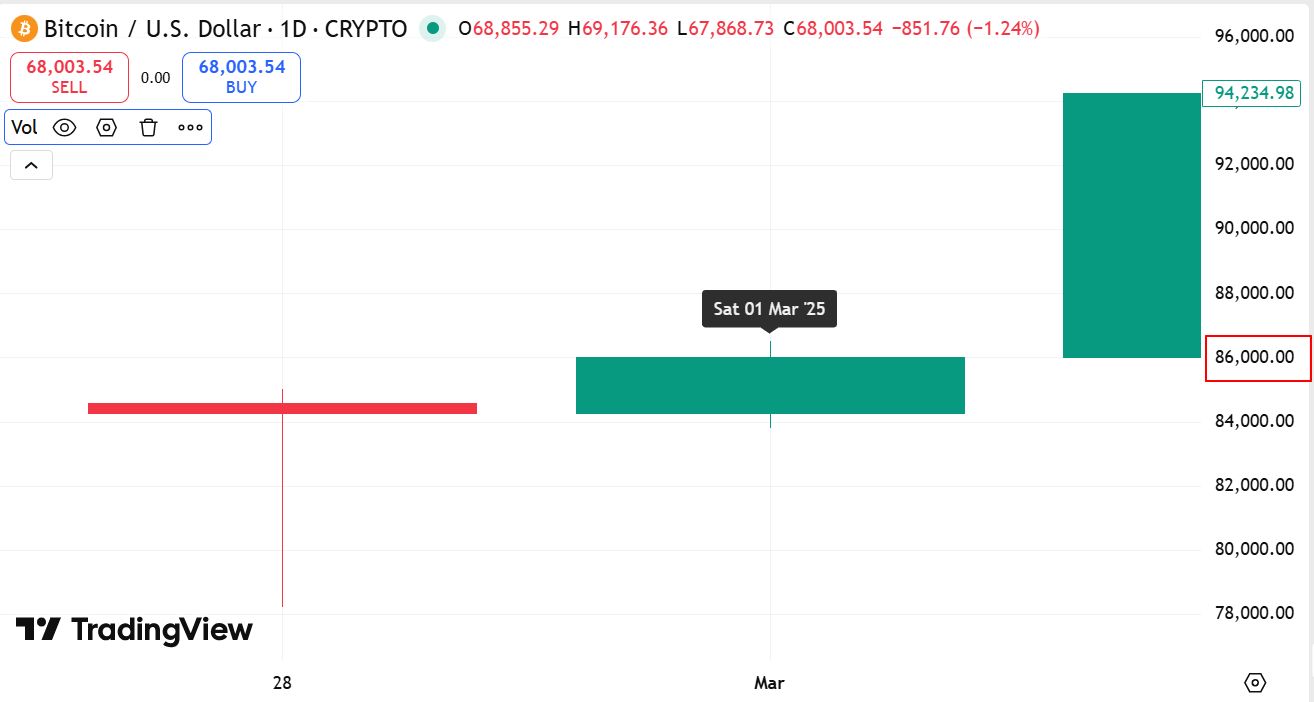
Bitcoin price dynamics (Source: TradingView)
By the close of March 29, 2025, it was around $82,500. Thus, over the Ramadan period, bitcoin declined by roughly 4% based on closing prices. This does not indicate either sustained growth or sustained decline tied specifically to the religious month. The movement looked more like part of the broader market trend.
One year, of course, is not a statistical rule. However, it does show that the «seasonal effect» of Ramadan on Bitcoin does not appear automatically.
The topic of cryptocurrencies is actively present in the Muslim world and among public figures. For example, musician Akon promoted the crypto project Akoin and the concept of Akon City—a smart city built using blockchain infrastructure—which he shared on his social media.
In sports, MMA champion Khabib Nurmagomedov has been involved in initiatives related to a tokenized sports ecosystem. The main surge of activity came in October 2025 after the announcement of a major partnership with MultiBank Group—the first large-scale regulated project involving Khabib.
In the institutional segment, Islamic financial institutions in the UAE are introducing Sharia-compliant crypto products, confirming interest in digital assets not only at the retail level but also among financial organizations.
Ramadan can affect intraday trading volumes and the distribution of activity throughout the day—especially in regions with a high share of Muslim population. Evening hours after iftar may show increased activity, while daytime participation may decline. However, the crypto market remains a global system where the religious calendar may influence participant behavior, but rarely determines price on its own.

 Afghanistan
 Albania
 Algeria
 Angola
 Argentina
 Armenia
 Australia
 Austria
 Azerbaijan
 Bahamas
 Bahrain
 Bangladesh
 Belarus
 Belgium
 Bolivia
 Botswana
 Brazil
 Brunei
 Bulgaria
 Cambodia
 Cameroon
 Canada
 Chile
Chile
 China
China
 Colombia
 Congo
Congo
 Costa Rica
 Cote d'Ivoire
 Croatia
 Cuba
Cuba
 Cyprus
 Czechia
 DR Congo
 Denmark
 Dominican Republic
 Ecuador
 Egypt
Egypt
 El Salvador
 Estonia
 Eswatini
 Ethiopia
 Finland
 France
 Georgia
 Germany
 Ghana
Ghana
 Greece
 Haiti
Haiti
 Hong Kong
 Hungary
 India
India
 Indonesia
 Iran, Islamic republic
 Iraq
Iraq
 Ireland
 Israel
 Italy
Italy
 Jamaica
 Japan
Japan
 Jordan
 Kazakhstan
 Kenya
Kenya
 Korea
Korea
 Kuwait
 Kyrgyzstan
 Laos
Laos
 Latvia
 Lebanon
 Lesotho
 Libya
Libya
 Lithuania
 Luxembourg
 Madagascar
 Malaysia
 Malta
Malta
 Mauritius
 Mexico
 Moldova
 Mongolia
 Montenegro
 Morocco
 Mozambique
 Myanmar
 Namibia
 Nepal
Nepal
 Netherlands
 New Zealand
 Nigeria
 North Macedonia
 Norway
 Oman
Oman
 Pakistan
 Palestine
 Panama
 Papua New Guinea
 Paraguay
 Peru
Peru
 Philippines
 Poland
 Portugal
 Puerto Rico
 Qatar
Qatar
 Reunion
 Romania
 Rwanda
 Saudi Arabia
 Serbia
 Singapore
 Slovakia
 Slovenia
 Somalia
 South Africa
 Spain
Spain
 Sri Lanka
 Sweden
 Switzerland
 Syria
Syria
 Taiwan
 Tajikistan
 Tanzania
 Thailand
 Trinidad and Tobago
 Tunisia
 Turkey
 UAE
UAE
 Uganda
 Ukraine
 United Kingdom
United States
United Kingdom
United States
 Uruguay
 Uzbekistan
 Venezuela
 Vietnam
 Yemen
Yemen
 Zambia
 Zimbabwe