

The euro remains one of the most closely watched currencies in global markets following a sharp reassessment of expectations surrounding European Central Bank policy. Recent comments from ECB officials have effectively confirmed the regulator’s readiness to raise interest rates at the June meeting.
ECB Chief Economist Philip Lane stated that markets “do not require additional signals” regarding the likelihood of tighter policy, while investors are now pricing in nearly a 90% probability of a June rate hike.
Inflation and oil prices once again become the main risk for Europe
The primary source of pressure remains a new wave of energy-driven inflation. Amid escalating tensions in the Middle East, oil and gas prices continue to trade well above levels seen at the beginning of the year, already impacting European economic data. Eurozone inflation accelerated to 3% in April, while the ECB had previously aimed to keep the figure closer to its 2% target. At the same time, the European Commission downgraded its 2026 eurozone growth forecast to 0.9%, warning about the risks associated with persistently high energy costs.
ECB shifts rhetoric as investors return to the euro
Just a few months ago, markets were discussing the possibility of ECB policy easing, but the tone has now changed sharply. Policymakers increasingly acknowledge that “the energy shock can no longer be ignored.” This has boosted demand for the euro and European bonds alike. German bond yields have moved higher, while EUR/USD continues to hold near local highs. Analysts believe expectations of further ECB tightening will remain the key driver for the euro in the short term.
What matters for the market now
The June ECB meeting remains the main focus for investors over the coming weeks. If the central bank confirms its hawkish stance and upgrades its inflation outlook, the euro may continue strengthening against the US dollar. However, weak eurozone growth and the cautious stance of the Federal Reserve — which is also in no hurry to cut rates — continue to limit upside potential. Markets are effectively caught between two major risks: elevated inflation and slowing economic growth, which suggests volatility in the euro is likely to remain high in the coming months.
Near-term outlook
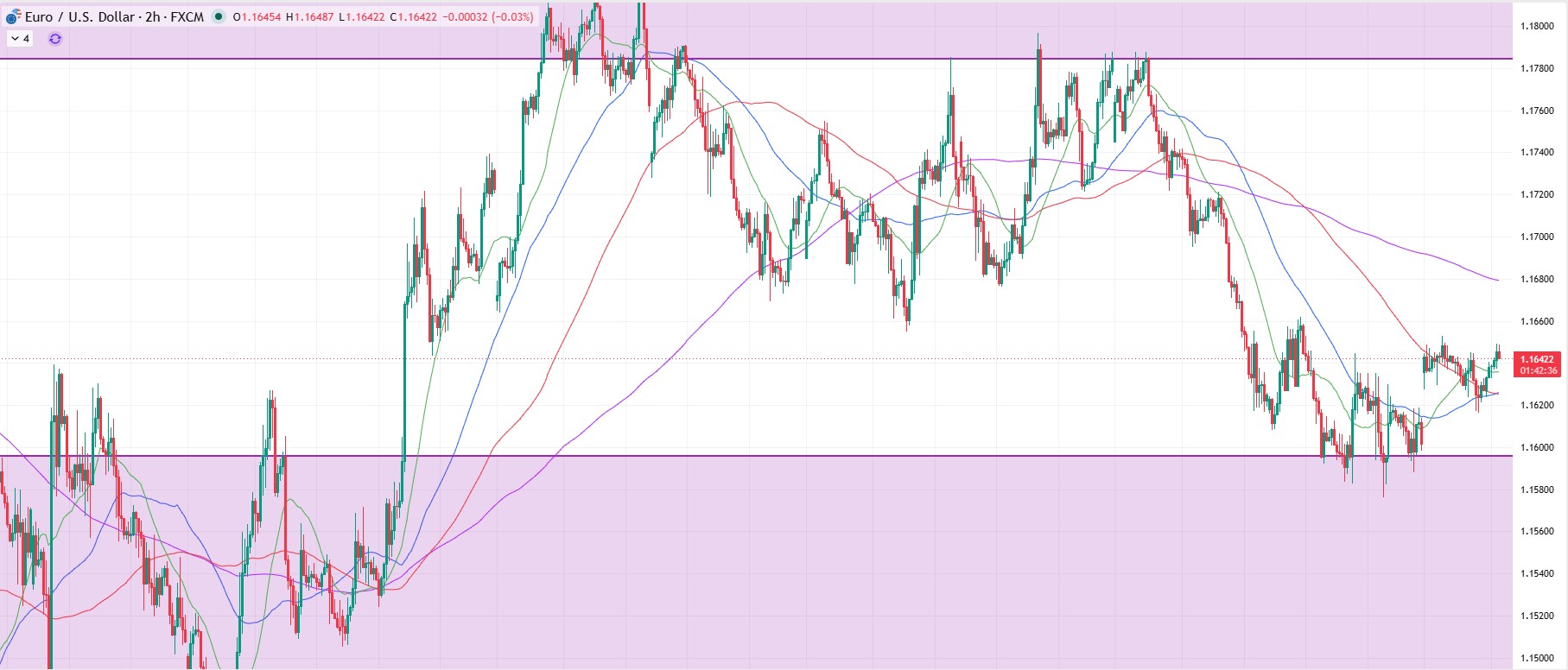
Buying interest in EUR/USD on dips toward support around 1.1620 pushed the pair back to resistance near 1.1650, increasing the chances of a breakout toward the 1.1670–1.1690 area. However, further upside attempts may still attract sellers. At the moment, there are no strong fundamental reasons for a large-scale move in either direction, which means the pair is likely to remain in a consolidation range in the near term, as previously noted in EUR/USD holds below 1.1650 as downside risks persist.





Latest EUR/USD News








-
 Afghanistan
-
 Albania
-
 Algeria
-
 Angola
-
 Argentina
-
 Armenia
-
 Australia
-
 Austria
-
 Azerbaijan
-
 Bahamas
-
 Bahrain
-
 Bangladesh
-
 Belarus
-
 Belgium
-
 Bolivia
-
 Botswana
-
 Brazil
-
 Brunei
-
 Bulgaria
-
 Cambodia
-
 Cameroon
-
 Canada
-
 Chile
Chile
-
 China
China
-
 Colombia
-
 Congo
Congo
-
 Costa Rica
-
 Cote d'Ivoire
-
 Croatia
-
 Cuba
Cuba
-
 Cyprus
-
 Czechia
-
 DR Congo
-
 Denmark
-
 Dominican Republic
-
 Ecuador
-
 Egypt
Egypt
-
 El Salvador
-
 Estonia
-
 Eswatini
-
 Ethiopia
-
 Finland
-
 France
-
 Georgia
-
 Germany
-
 Ghana
Ghana
-
 Greece
-
 Haiti
Haiti
-
 Hong Kong
-
 Hungary
-
 India
India
-
 Indonesia
-
 Iran, Islamic republic
-
 Iraq
Iraq
-
 Ireland
-
 Israel
-
 Italy
Italy
-
 Jamaica
-
 Japan
Japan
-
 Jordan
-
 Kazakhstan
-
 Kenya
Kenya
-
 Korea
Korea
-
 Kuwait
-
 Kyrgyzstan
-
 Laos
Laos
-
 Latvia
-
 Lebanon
-
 Lesotho
-
 Libya
Libya
-
 Lithuania
-
 Luxembourg
-
 Madagascar
-
 Malaysia
-
 Malta
Malta
-
 Mauritius
-
 Mexico
-
 Moldova
-
 Mongolia
-
 Montenegro
-
 Morocco
-
 Mozambique
-
 Myanmar
-
 Namibia
-
 Nepal
Nepal
-
 Netherlands
-
 New Zealand
-
 Nigeria
-
 North Macedonia
-
 Norway
-
 Oman
Oman
-
 Pakistan
-
 Palestine
-
 Panama
-
 Papua New Guinea
-
 Paraguay
-
 Peru
Peru
-
 Philippines
-
 Poland
-
 Portugal
-
 Puerto Rico
-
 Qatar
Qatar
-
 Reunion
-
 Romania
-
 Rwanda
-
 Saudi Arabia
-
 Serbia
-
 Singapore
-
 Slovakia
-
 Slovenia
-
 Somalia
-
 South Africa
-
 Spain
Spain
-
 Sri Lanka
-
 Sweden
-
 Switzerland
-
 Syria
Syria
-
 Taiwan
-
 Tajikistan
-
 Tanzania
-
 Thailand
-
 Trinidad and Tobago
-
 Tunisia
-
 Turkey
-
 UAE
UAE
-
 Uganda
-
 Ukraine
-
 United Kingdom
-
United States
-
 Uruguay
-
 Uzbekistan
-
 Venezuela
-
 Vietnam
-
 Yemen
Yemen
-
 Zambia
-
 Zimbabwe
- Forex
- Crypto











