
Forex Regulation In Denmark: Legal Framework Overview


Editorial Note: While we adhere to strict Editorial Integrity, this post may contain references to products from our partners. Here's an explanation for How We Make Money. None of the data and information on this webpage constitutes investment advice according to our Disclaimer.
In Denmark, the Forex market is regulated by the Danish Financial Supervisory Authority (DFSA), which enforces strict standards to protect investors and maintain market integrity. Brokers are required to adhere to the European Securities and Markets Authority (ESMA) regulations, including a leverage limit of 30:1 for retail clients and mandatory negative balance protection. These measures are aimed at reducing risks and ensuring transparency in Forex trading.
Forex regulation plays a key role in ensuring its transparency and protecting traders. In Denmark, the sector is supervised by the Danish Financial Supervisory Authority (DFSA), which sets requirements for brokers and monitors their activities. Additionally, the Forex market in the country is subject to European Union regulations, in particular the rules developed by the European Securities and Markets Authority (ESMA). This creates a strict control system aimed at minimizing risks for traders and investors. Here we will look at the legal basis for Forex regulation in Denmark, the key requirements for brokers and the mechanisms for protecting traders.
Risk warning: Forex trading carries high risks, with potential losses including your entire deposit. Market fluctuations, economic instability, and geopolitical factors impact outcomes. Studies show that 70-80% of traders lose money. Consult a financial advisor before trading.
How is Forex regulated in Denmark
The Forex market in Denmark is subject to strict regulation. The primary regulatory authority is the Danish Financial Supervisory Authority (DFSA, Finanstilsynet), which oversees banks, insurance companies, investment funds, and Forex brokers. DFSA is responsible for licensing financial institutions, monitoring their financial health, and ensuring compliance with regulatory requirements.
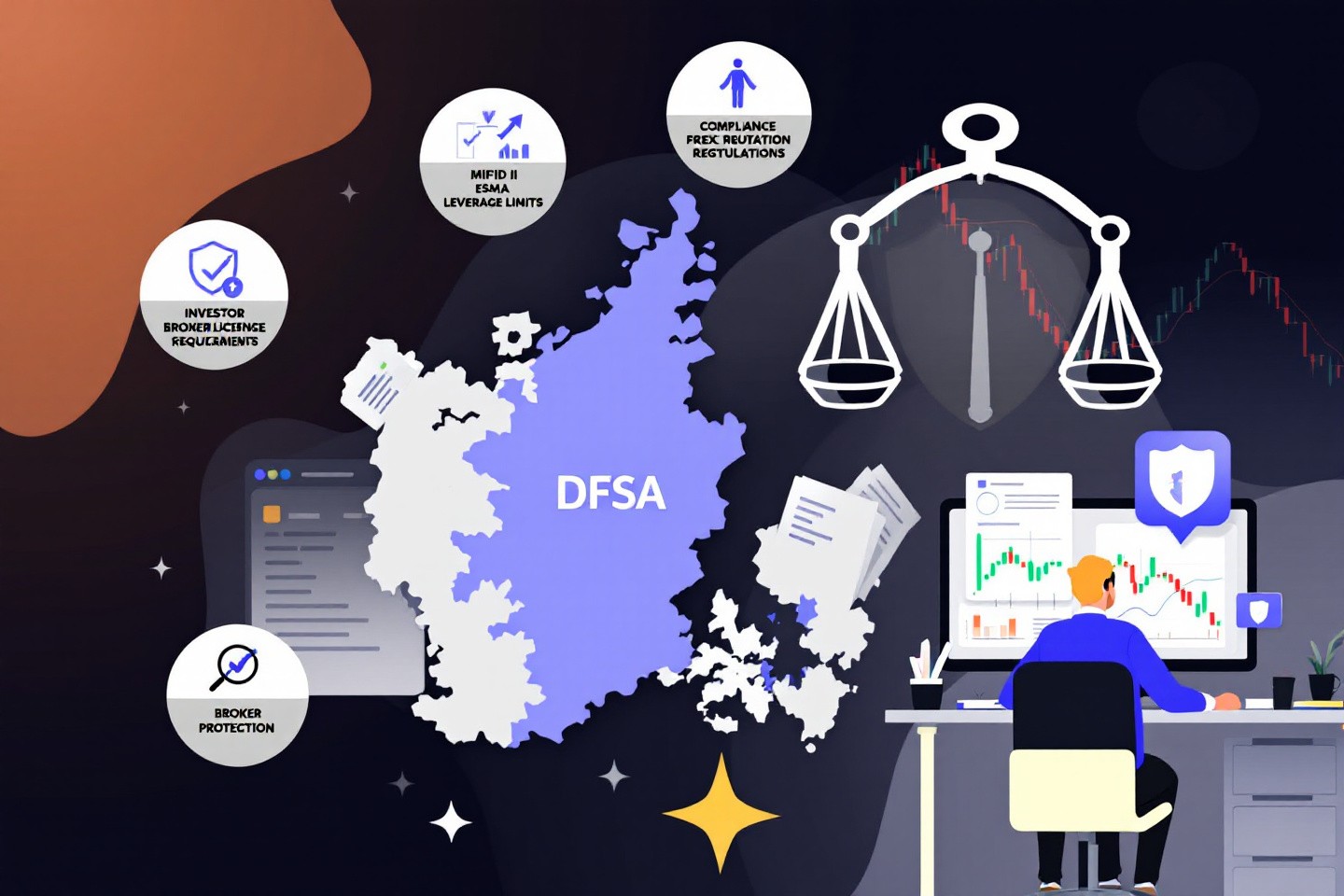
In addition to national regulations, Denmark adheres to the standards set by the European Securities and Markets Authority (ESMA). ESMA establishes guidelines for EU financial markets, including leverage restrictions and transparency requirements. For example, ESMA limits leverage for major currency pairs to 30:1, while other assets have a maximum leverage of 20:1 or lower, depending on their category.
Forex brokers wishing to operate in Denmark must obtain a DFSA license. To do so, they must meet several requirements, including maintaining sufficient capital, having a transparent management structure, and implementing effective internal control systems. DFSA regularly audits licensed firms to assess their financial stability and adherence to regulatory standards. Find out what currency Denmark uses, the unique traits of the Danish krone (DKK), and how to trade it successfully with professional insight.
Regulators and legislative framework
The Forex market in Denmark is regulated by both national and European authorities to ensure transparency and security in financial operations.
Danish financial supervisory authority (DFSA)
The DFSA is responsible for regulating and supervising Forex brokers operating in Denmark. It ensures compliance with financial regulations, protects traders from fraudulent practices, and monitors brokers’ solvency. The DFSA plays a crucial role in licensing brokers, enforcing capital requirements, and overseeing risk management practices.
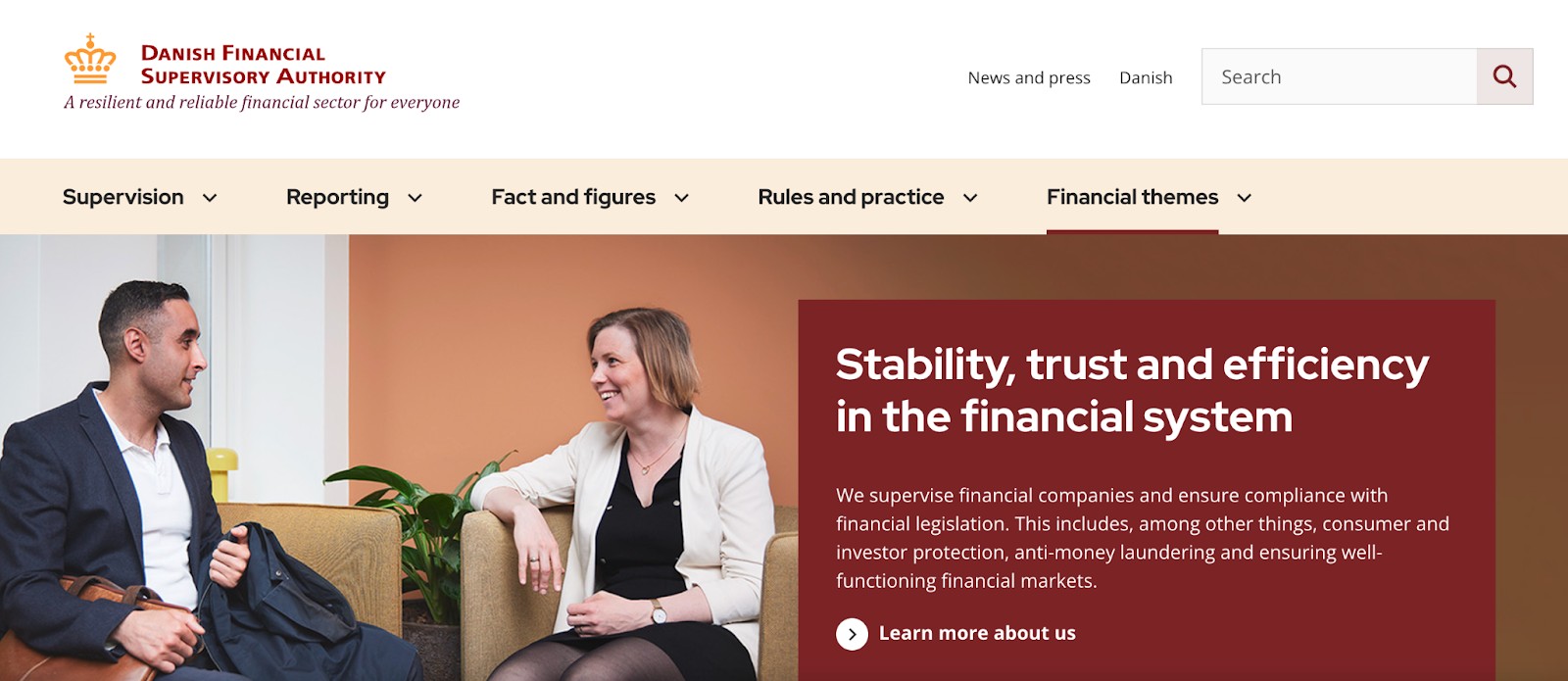
Forex brokers under DFSA supervision must:
Obtain a DFSA license before operating in Denmark.
Follow capital adequacy requirements to ensure financial stability.
Implement anti-money laundering (AML) and know-your-customer (KYC) policies.
Maintain segregated client funds to protect traders’ money.
Provide negative balance protection to prevent clients from owing more than their deposits.
Brokers that fail to comply with DFSA regulations face penalties, warnings, and potential revocation of their licenses.
EU regulations (ESMA)
Denmark follows ESMA’s strict regulations on Forex and CFD trading, ensuring uniform investor protections across the EU.
Key ESMA regulations include:
Leverage limits. 30:1 for major currency pairs, 20:1 for non-major pairs, and 2:1 for cryptocurrencies.
Margin close-out rule. Brokers must close trades if funds drop below 50% of the required margin.
Negative balance protection. Prevents traders from losing more than their deposited funds.
No trading incentives. Brokers cannot offer bonuses, deposit rewards, or gifts to encourage trading.
Risk warnings. Brokers must clearly disclose the percentage of traders losing money on their platforms.
All Forex Regulators Reviews


Licensing of Forex brokers in Denmark
Forex brokers planning to operate in Denmark must obtain a license from the Danish Financial Supervisory Authority (DFSA). To do so, they must meet strict requirements designed to ensure transparency and reliability in financial operations.
Requirements for brokers
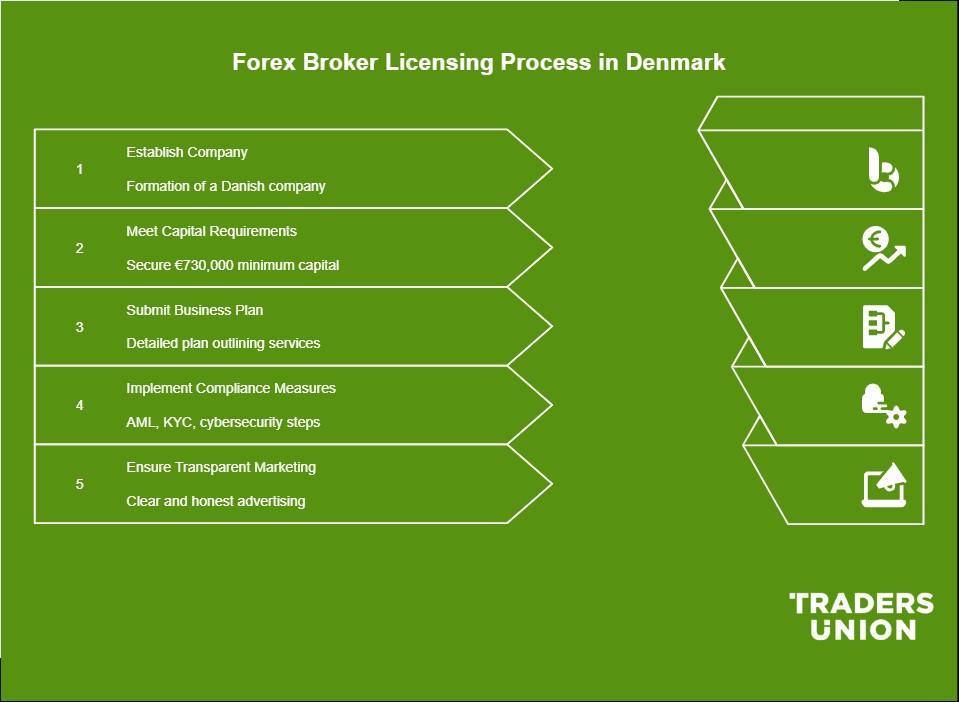
To legally operate in Denmark, Forex brokers must obtain a DFSA license by meeting strict criteria:
Establishing a Danish company with a clear ownership structure.
Maintaining a minimum capital of €730,000 (for brokers holding client funds).
Providing a detailed business plan outlining services and risk management.
Implementing AML, KYC, and cybersecurity measures.
Ensuring all marketing and advertisements are transparent and not misleading.
Once approved, brokers are continuously monitored by the DFSA to ensure compliance.
Restrictions for unregulated and offshore brokers
Denmark strictly prohibits offshore brokers without DFSA or EU licensing from offering services to Danish traders.
Unauthorized brokers cannot solicit Danish clients.
Advertising Forex services without DFSA approval is illegal.
Unlicensed brokers face fines, legal action, and website blacklisting.
Traders dealing with unregulated brokers lose access to investor protection schemes and have little recourse if scammed. The DFSA issues public warnings against fraudulent platforms and urges traders to verify broker licenses before investing.
How are traders regulated and protected
In Denmark, trader protection in the Forex market is ensured through a set of measures aimed at preventing fraud, limiting risks, and increasing transaction transparency.
Investor protection policy
The Danish Financial Supervisory Authority (DFSA) plays a pivotal role in safeguarding investors. It enforces stringent requirements on Forex brokers, mandating licensing and adherence to transparency standards. The DFSA actively supervises financial companies to ensure compliance with financial legislation, which includes consumer and investor protection.
Leverage limits and negative balance protection
In accordance with European Securities and Markets Authority (ESMA) regulations, Denmark enforces leverage restrictions for retail traders:
30:1 for major currency pairs;
20:1 for non-major currency pairs, gold, and major indices;
10:1 for other commodities and non-major indices;
5:1 for individual stocks;
2:1 for cryptocurrencies.
These limits help reduce excessive losses. Additionally, brokers must provide negative balance protection, preventing traders from losing more than their deposited funds.
Transaction transparency and broker reporting
DFSA mandates full transparency in Forex transactions and broker reporting. Brokers must inform clients of the risks associated with derivative trading and provide clear data on commissions and spreads. Regular audits and regulatory inspections help maintain trust in the financial system and protect traders' interests.
How to choose a reliable Forex broker in Denmark
Choosing a reliable Forex broker in Denmark requires thorough analysis and consideration of several factors that ensure security and efficient trading.
Checking a broker’s license on the DFSA website
First, verify that the broker holds a valid license from the Danish Financial Supervisory Authority (DFSA) or another reliable EU regulator. To do this, visit the regulator's official website and use the search system for licensed companies. Enter the broker’s name to check its registration and license status. If the broker is not listed in the register, it may be operating illegally.
Key selection criteria
Security. Review the measures a broker implements to protect client funds, including segregated accounts and participation in compensation schemes.
Trading conditions. Assess spreads, commissions, available trading instruments, and platforms. Ensure that the conditions align with your trading strategies and expectations.
Customer support. Check the availability and quality of customer service. Having prompt and professional support in your language is a significant advantage.
In Denmark, traders can choose between local brokers regulated by DFSA and foreign brokers licensed by other European regulators, such as CySEC (Cyprus) or FCA (UK). Brokers operating under EU regulations must comply with MiFID II directives, ensuring a high level of investor protection. When choosing between a Danish or foreign broker, consider factors such as language support, trading conditions, and company reputation.
| Plus500 | IG Markets | XPro Markets | Wonderinterest | XM | |
|---|---|---|---|---|---|
|
Max. Regulation Level |
Tier-1 | Tier-1 | Tier-1 | Tier-1 | Tier-1 |
|
CySec |
Yes | Yes | Yes | Yes | Yes |
|
BaFin |
No | Yes | No | No | No |
|
CNMV |
No | No | No | No | No |
|
AMF (France) |
No | No | No | No | No |
|
Min Spread EUR/USD, pips |
0.5 | 0.6 | 0.2 | 0.3 | 0.7 |
|
Max Spread EUR/USD, pips |
0.9 | 1.2 | 0.7 | 0.7 | 1.2 |
|
Withdrawal fee, % |
No | No | 0-1.5 | No | No |
|
Withdrawal fee, $ |
No | No | 10-100 | No | No |
|
Inactivity fee, $ |
10 | No | 100-500 | 98 | 10 |
|
Investor protection |
€20,000 £85,000 SGD 75,000 | £85,000 €100,000 SGD 75,000 | €20,000 | €20 000 | £85,000 €20,000 |
|
Open an account |
Go to broker 80% of retail CFD accounts lose money. |
Study review | Study review | Study review | Go to broker Your capital is at risk. |
Why trust us
15+ years of independent market analysis
140+ evaluation criteria, reviewed by 50+ experts
Data-driven reviews of 200+ platforms, updated regularly
20+ industry awards & a wide network of global media partners
Learn more about our methodology and editorial policies.


Hidden risks in Forex licensing and trade monitoring
If you’re trading Forex in Denmark, don’t just assumea DFSA license means full protection — the type of license matters just as much. Some brokers operate under a limited-scope registration that lets them process trades but avoid strict risk management rules. This means they might not offer full negative balance protection across all trading instruments, which could leave you exposed if the market moves against you fast. Instead of just checking if a broker is licensed, dig deeper — look for firms that explicitly mention full investor protection, best execution policies, and safeguards that apply to every trade, not just at the account level. Small details like these can make a big difference when markets turn volatile.
One thing many traders overlook is how their trades are reported to regulators. In Denmark, every trade you place is monitored in real time under strict reporting laws. If you use strategies like scalping or high-frequency trading, your broker is required to flag certain patterns that might seem unusual.
The DFSA keeps an eye out for anything that looks like market abuse or excessive risk-taking, and while most traders never face an issue, those who do can find themselves answering questions about their trading behavior. If you want to avoid unnecessary attention, keep detailed records of your trades and withdrawal history so you can explain your strategy if needed.
Conclusion
Forex market regulation in Denmark ensures financial system stability and protects traders' interests. The Danish Financial Supervisory Authority (DFSA) oversees broker activities, enforcing strict regulatory standards. European regulations, such as ESMA and MiFID II directives, complement national measures by limiting leverage and ensuring transaction transparency. Broker licensing and client protection mechanisms help mitigate risks associated with forex trading. When choosing a broker, traders should verify its registration with DFSA, assess trading conditions, platform security, and customer support quality. Following these principles allows traders to operate in a secure and well-regulated environment.
FAQs
Can non-residents open an account with a Danish Forex broker?
Yes, non-residents can open an account if they meet the requirements of the broker. Usually, proof of identity, address, and source of income is required. Some brokers may impose additional conditions depending on the client’s country.
What taxes does a Forex trader have to pay in Denmark?
Income from Forex trading is subject to capital gains tax. The rate depends on the amount of profit and the tax status of the trader. It is recommended to consult a tax advisor to calculate the exact amount of mandatory payments.
Is it possible to trade Forex in Denmark without a licensed broker?
No, unlicensed brokers are prohibited and using their services may lead to financial risks. Trading through unregulated platforms does not provide guarantees of protection of funds and legal support in case of disputes.
Are there any restrictions on automated trading (robots, algorithms) in Denmark?
Automated trading is permitted as long as the software complies with the broker’s requirements and does not violate market rules. Some strategies, such as high-frequency trading (HFT), may be restricted or subject to additional monitoring.
Editors' Top Picks and Insights

Tokenized stocks in the spotlight: How do they work and are they worth trading?

Do politicians make the best stock traders?

Crypto test drive: How automakers are exploring digital assets

Lindsey Graham death: U.S. senator’s crypto legacy

Tether under pressure: USDT in Europe, audit questions, and the fight for trust

Lean Ethereum: Why Buterin wants to rebuild the network
Related Articles
Team that worked on the article
Maxim Nechiporenko has been a contributor to Traders Union since 2023. He started his professional career in the media in 2006.
Chinmay Soni is a financial analyst with more than 5 years of experience in working with stocks, Forex, derivatives, and other assets. As a founder of a boutique research firm and an active researcher, he covers various industries and fields, providing insights backed by statistical data.
Mirjan Hipolito is a journalist and news editor at Traders Union. She is an expert crypto writer with five years of experience in the financial markets.

-
 Afghanistan
-
 Albania
-
 Algeria
-
 Angola
-
 Argentina
-
 Armenia
-
 Australia
-
 Austria
-
 Azerbaijan
-
 Bahamas
-
 Bahrain
-
 Bangladesh
-
 Belarus
-
 Belgium
-
 Bolivia
-
 Botswana
-
 Brazil
-
 Brunei
-
 Bulgaria
-
 Cambodia
-
 Cameroon
-
 Canada
-
 Chile
Chile
-
 China
China
-
 Colombia
-
 Congo
Congo
-
 Costa Rica
-
 Cote d'Ivoire
-
 Croatia
-
 Cuba
Cuba
-
 Cyprus
-
 Czechia
-
 DR Congo
-
 Denmark
-
 Dominican Republic
-
 Ecuador
-
 Egypt
Egypt
-
 El Salvador
-
 Estonia
-
 Eswatini
-
 Ethiopia
-
 Finland
-
 France
-
 Georgia
-
 Germany
-
 Ghana
Ghana
-
 Greece
-
 Haiti
Haiti
-
 Hong Kong
-
 Hungary
-
 India
India
-
 Indonesia
-
 Iran, Islamic republic
-
 Iraq
Iraq
-
 Ireland
-
 Israel
-
 Italy
Italy
-
 Jamaica
-
 Japan
Japan
-
 Jordan
-
 Kazakhstan
-
 Kenya
Kenya
-
 Korea
Korea
-
 Kuwait
-
 Kyrgyzstan
-
 Laos
Laos
-
 Latvia
-
 Lebanon
-
 Lesotho
-
 Libya
Libya
-
 Lithuania
-
 Luxembourg
-
 Madagascar
-
 Malaysia
-
 Malta
Malta
-
 Mauritius
-
 Mexico
-
 Moldova
-
 Mongolia
-
 Montenegro
-
 Morocco
-
 Mozambique
-
 Myanmar
-
 Namibia
-
 Nepal
Nepal
-
 Netherlands
-
 New Zealand
-
 Nigeria
-
 North Macedonia
-
 Norway
-
 Oman
Oman
-
 Pakistan
-
 Palestine
-
 Panama
-
 Papua New Guinea
-
 Paraguay
-
 Peru
Peru
-
 Philippines
-
 Poland
-
 Portugal
-
 Puerto Rico
-
 Qatar
Qatar
-
 Reunion
-
 Romania
-
 Rwanda
-
 Saudi Arabia
-
 Serbia
-
 Singapore
-
 Slovakia
-
 Slovenia
-
 Somalia
-
 South Africa
-
 Spain
Spain
-
 Sri Lanka
-
 Sweden
-
 Switzerland
-
 Syria
Syria
-
 Taiwan
-
 Tajikistan
-
 Tanzania
-
 Thailand
-
 Trinidad and Tobago
-
 Tunisia
-
 Turkey
-
 UAE
UAE
-
 Uganda
-
 Ukraine
-
 United Kingdom
-
United States
-
 Uruguay
-
 Uzbekistan
-
 Venezuela
-
 Vietnam
-
 Yemen
Yemen
-
 Zambia
-
 Zimbabwe
- Forex
- Crypto











